Hidden beneath your home is one of the most critical—and expensive—systems you’ll likely never see: your sewer line. Whether you’re buying a home or have lived in yours for years, it’s easy to overlook the condition of your main sewer line… until something goes wrong.
That’s where a sewer scope inspection comes in.
This simple but powerful inspection involves sending a specialized camera into your home’s sewer line to identify blockages, cracks, tree root intrusions, and other hidden issues before they lead to costly damage or full system failure.
In this guide from Western North Carolina Property Inspections, we’ll walk you through:
- What a sewer scope inspection includes
- Why it’s critical in homes across Asheville, Hendersonville, Brevard, and beyond
- Common problems found during inspections
- When you should get one
- What to expect during the process
Let’s dig in—without having to dig up your yard.
What Is a Sewer Scope Inspection?
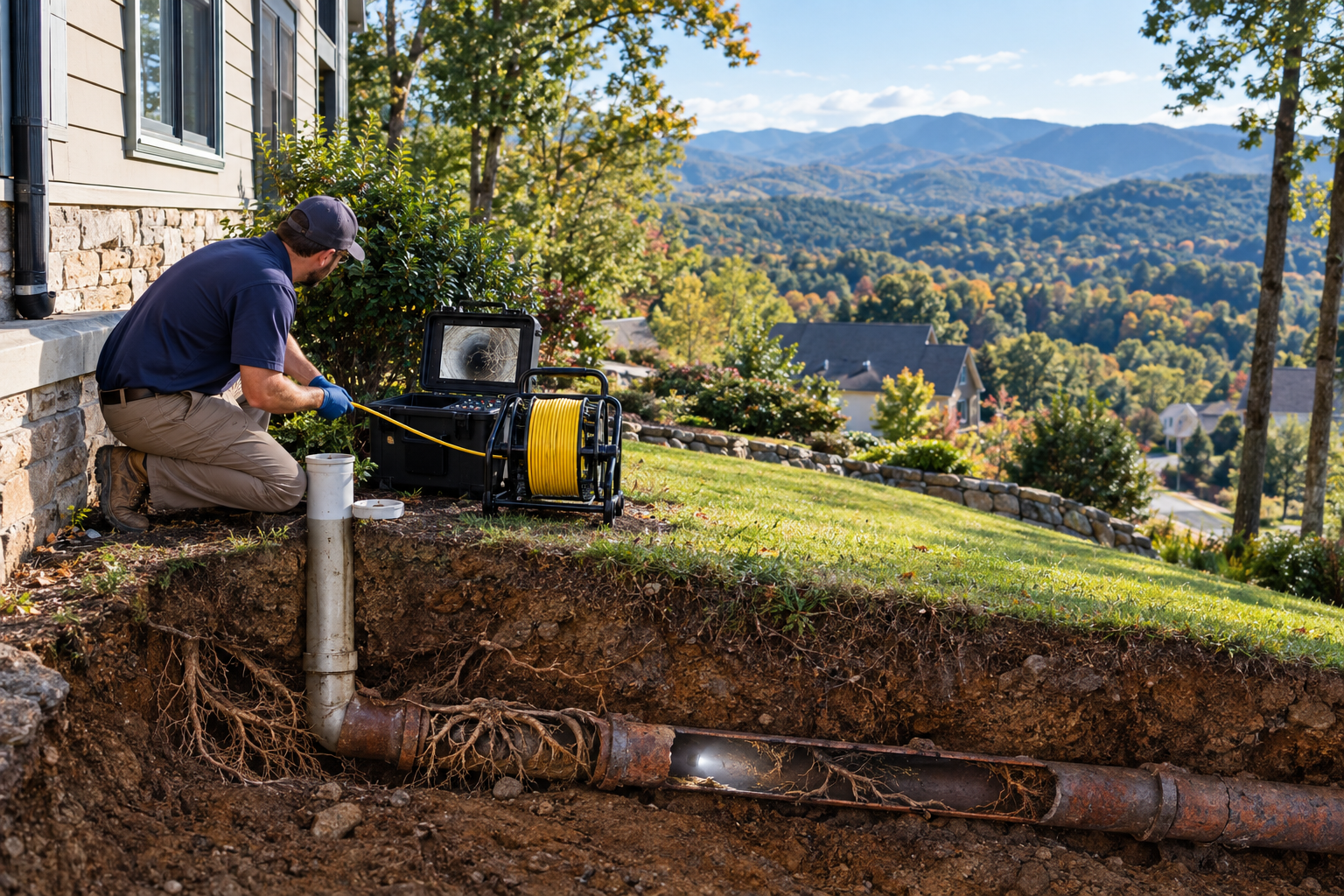
A sewer scope inspection is a non-invasive procedure where a trained inspector inserts a high-definition, waterproof camera into the main drain line of your home. The camera is fed through the sewer line, allowing real-time video footage to be captured and reviewed.
The inspection can reveal a range of problems that are otherwise impossible to detect without excavation.
Most scope inspections take 30–60 minutes and provide immediate insight into the condition and functionality of the sewer lateral, the pipe that connects your home’s plumbing to the city’s main sewer or a septic system.
Why It’s Important in Western North Carolina
In Asheville, Hendersonville, and other parts of Western NC, several factors make sewer scope inspections especially important:
1. Aging Infrastructure
Many homes in this region—especially those built before the 1980s—have older clay, cast iron, or Orangeburg piping, all of which are prone to failure.
2. Heavy Tree Growth
Western NC’s lush, forested environment means tree root intrusion is one of the most common causes of sewer line damage.
3. Hilly Terrain & Soil Shifting
Mountainous terrain and heavy rainfall can lead to ground movement, which puts stress on underground pipes.
4. Septic System Usage
In rural areas like Brevard and surrounding communities, many homes are on septic systems, which benefit from scope inspections to confirm the condition of connecting pipes and outflow.
In short: sewer issues are more common here than most people realize, and they often go unnoticed until there’s a backup, flood, or costly repair bill.
What Does a Sewer Scope Inspection Include?
Here’s a breakdown of what you can expect during a professional sewer scope inspection with Western North Carolina Property Inspections:
1. Accessing the Sewer Line
The inspector locates the best access point, usually:
- A main clean-out (often in the basement, garage, crawlspace, or exterior wall)
- A roof vent (if no accessible clean-out exists)
- Through a plumbing fixture (in special cases)
2. Inserting the Camera
A small, flexible, waterproof video camera is fed into the sewer line. The cable allows it to travel deep into the lateral line, all the way to the city main or septic tank connection.
3. Real-Time Video Analysis
The inspector watches a live video feed on a monitor, identifying:
- Blockages (grease, sludge, foreign objects)
- Cracks or breaks in the pipe
- Tree root intrusions
- Pipe belly (sagging areas that hold water)
- Offset joints
- Material degradation (rust, erosion, or collapse)
4. Measurement & Location
Some cameras have built-in sensors to measure how far into the line the issue occurs. If needed, surface locators can pinpoint the exact spot in the yard for repairs—saving time and excavation costs.
5. Documentation & Reporting
You’ll receive:
- A written summary of findings
- High-resolution video footage or snapshots
- Recommendations for repairs or further evaluation
If problems are found, this report is extremely valuable for real estate negotiations or repair planning.
Common Problems Found During Sewer Scope Inspections
Some of the most frequent issues we uncover in Western NC homes include:
- Tree root intrusion: Roots enter through small cracks or joints and grow until they block the line.
- Pipe sagging (bellies): Common in older or poorly compacted installations, where water collects and doesn’t flow properly.
- Broken, cracked, or collapsed pipes: Often due to aging materials or ground movement.
- Grease or sludge buildup: Especially in homes with frequent cooking or older kitchen plumbing.
- Improper connections: DIY repairs or remodels may lead to cross-connections or illegal plumbing work.
Any of these issues can result in sewer backups, foundation damage, or expensive emergency repairs if left unaddressed.
When Should You Get a Sewer Scope Inspection?
For Home Buyers:
A sewer scope should be a standard part of your pre-purchase inspection—especially for homes:
- Built before 1985
- With mature trees nearby
- On sloped or unstable ground
- That have been vacant for a long time
Even if everything looks great inside, hidden sewer damage can be a deal-breaker. A $300–$400 inspection could save you from a $10,000 repair.
For Homeowners:
Already own your home? Consider a sewer scope if you’re experiencing:
- Slow drains or frequent clogs
- Unexplained yard wet spots
- Sewer odors in the house
- Gurgling toilets
- Water backing up in the lowest fixtures (e.g., basement shower)
For Sellers:
Avoid last-minute surprises that can derail a sale. Providing a clean sewer scope report adds value and reassurance to buyers.
Cost of a Sewer Scope Inspection in NC
In North Carolina, sewer scope inspections typically cost $250–$450, depending on accessibility, home size, and location.
At Western North Carolina Property Inspections, we offer standalone sewer scope services or bundle them with full home inspections for added value.
It’s a small investment that can prevent a very large problem.
What Happens If a Problem Is Found?
If damage or blockages are found, your options may include:
- Hydro-jetting: High-pressure cleaning to remove blockages or roots
- Spot repairs: Cutting and replacing damaged sections
- Full replacement: In cases of collapsed or severely degraded lines
- Trenchless repair: Less invasive, modern methods (e.g., pipe lining or bursting)
We’ll refer you to trusted local plumbers or sewer repair contractors for next steps. Our job is to provide unbiased, detailed information—not to sell repairs.
Frequently Asked Questions
Do all home inspections include sewer scopes?
No. Sewer scope inspections are considered a specialty add-on service. Be sure to request it when booking your inspection.
Can I do this myself?
We don’t recommend it. Proper equipment, training, and interpretation of results are critical to a useful inspection.
Do new homes need sewer scopes?
Yes. Even new construction can have sewer line problems due to poor installation, debris in the line, or improper grading.
Is it worth the money?
Absolutely. One missed issue can cost thousands. A sewer scope offers peace of mind and solid ROI—especially when buying a home.
Schedule Your Sewer Scope Inspection in Western NC
Whether you're buying, selling, or just protecting your current investment, a sewer scope inspection can reveal hidden problems before they become major expenses.
At Western North Carolina Property Inspections, we provide detailed sewer line inspections throughout:
- Asheville
- Hendersonville
- Brevard
- And surrounding Western NC communities
Our experienced team uses advanced camera technology to deliver fast, accurate results—often within 24 hours.